
Is it a HIIT or Miss? HIIT Workout 101
HIIT Workout 101
Do you want to build muscle, burn fat and increase your metabolism all at the same time? Well you can, and it is called high intensity interval training (HIIT). Unlike low intensity, long duration cardiovascular training (LISS), HIIT only requires short high intensity efforts and rest periods over a shorter duration in time comparison to LISS cardio.
Typically HIIT is performed by completing a 5 minute warm up followed by 30 second efforts and 30 second rest periods repeated for the duration of 15-20 minutes depending on your level of fitness. When I first started HIIT training my rest periods were twice as long as my efforts, however as my fitness levels increased I progressed my training intensity and duration whilst decreasing my rest periods.
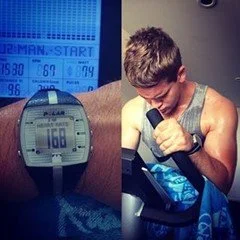
Unlike LISS where your heart rate remains steady at around 120-130 beats per minute, A HIIT workout alternates between short work intervals (70-90 percent max heart rate) and rest periods (60-65 percent max heart rate). You can calculate your max heart rate by using the following calculation, 220 minus your age, therefore at 25 years of age my approximate maximum heart rate is 195 beats per minute. Although most cardio machines at the gym have inbuilt heart rate monitors, I suggest using a personal heart rate monitor (Pictured below Polar FT7) which can be purchased for under $100 AUD.
The exercises you can perform in a HIIT session are only limited by your imagination and can range from spin bike efforts, treadmill sprints, hill sprints, bodyweight circuits, sled pushes or even rowing machine intervals or a combination of the above. When it comes to HIIT virtually any exercise is permissible providing it gets your heart rate high enough!
“If you want to change your metabolism, you have to increase muscle mass and increase your muscle’s oxidative capacity. Your muscles have these energy producing units called ‘mitochondria’ and this is where ATP are made and fats are burned””
— Layne E. Norton
Unlike low intensity exercise, HIIT training actually increases mitochondrial capacity and instead of only burning calories at the time of exercise, you continue to burn calories at an increased rate for hours after the exercise, also known as excess post-exercise oxygen consumption (EPOC), as a result of HIIT training you can actually increase the amount of mitochondria you produce. Furthermore, the benefits of increasing the intensity of your workout magnifies the extent of EPOC which can contribute to your body burning calories at an increased rate for up to 24-48 hours.
“HIIT boosts your metabolism because you increase the mitochondria density of your muscle, so you increase the muscles oxidative capacity and you really do burn more calories”
— Layne E. Norton
While this all might sound too good to be true, it isn’t, as depicted above, research has proven the benefits of HIIT and anecdotally the results speak for themselves.
I have personally been using a HIIT program consisting of the following but you could easily move the workout outside to a sprint based format (example shown) or if you are feeling adventurous a kettle bell or resistance style HIIT circuit, the possibilities are endless!
Example Workout- Stationary Spin Bike
· 5 minutes Warm up
· 30 seconds of High Intensity Effort
· 60 seconds of Rest
· Repeat 8-10 times for a total workout time of 15-20 minutes
Example Workout- Outside Hill Sprints
· 5 minutes warm up (slow jog)
· 30 seconds on hill sprint: heart rate should be maxed for full 30 seconds
· Recover to get your breath back
· Repeat 5 times for 12 minutes work total
In comparison to LISS, HIIT is not easy and if you are anything like me, the last thing you want to do after a long day at work or study is max out your heart rate several times in a short session. Even though it may be uncomfortable to push yourself to the limit it is worth remembering that the hardest things in life are done the least but provide the most benefits. Whether it is putting in extra study for your exams when you could be partying or pushing a little bit harder in the gym, the results and sense of achievement are worth it.
Incorporating high intensity interval training into my weekly routine has been one of the best things I have done, unlike LISS your body will not readily adapt to HIIT, it can it be completed in a shorter time frame and it also provides a far greater total calorie burn, I don’t know about you but that sounds like a worthwhile trade-off for the extra effort required!
So next time you are planning a cardio session, give HIIT a try, you have nothing to lose and a whole lot to gain!